Wheel Loaders in Quebec: The Complete Guide to Making the Right Choice
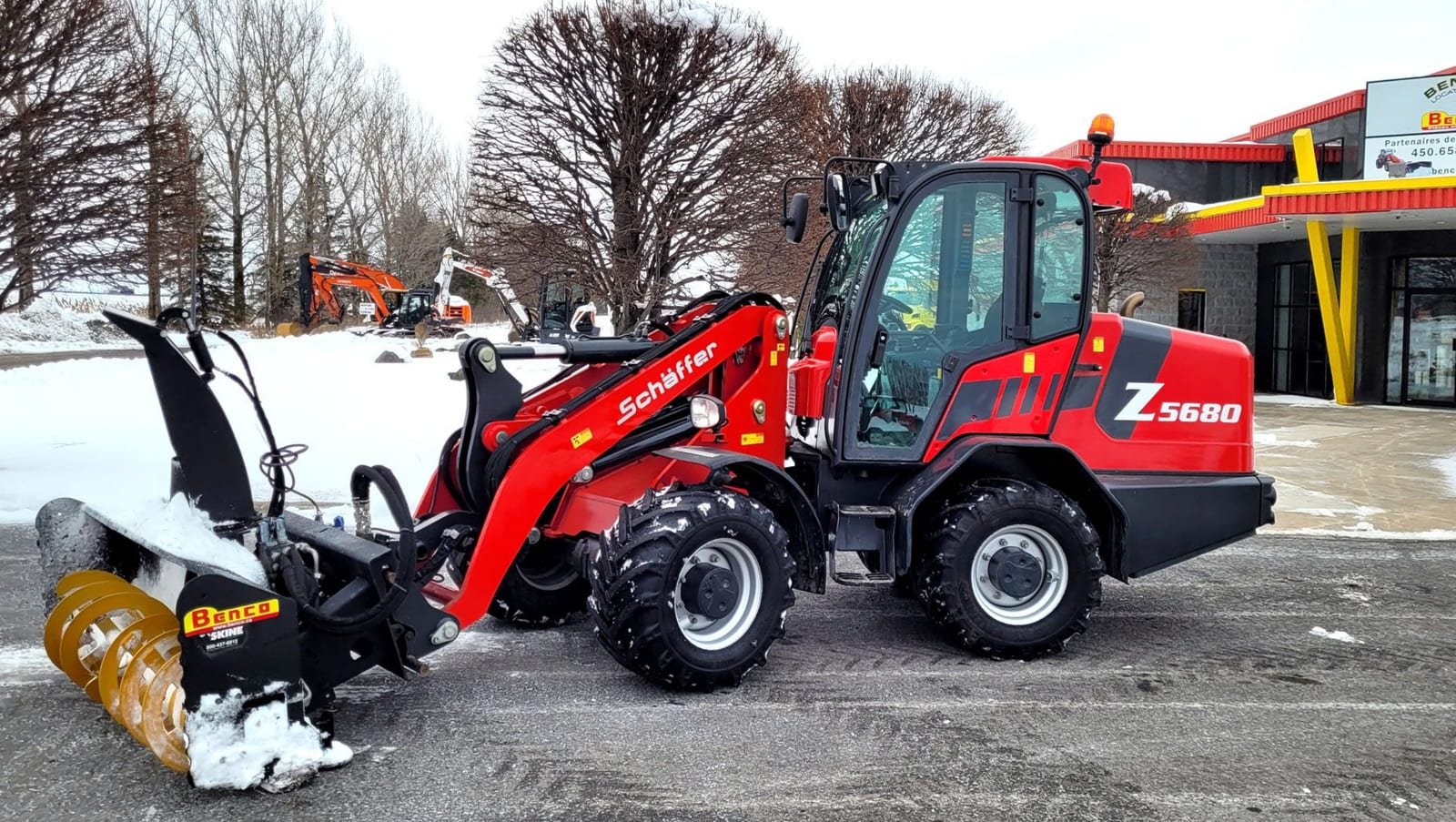
Need a high-performance wheel loader? Check out our comprehensive guide to prices, rentals, and the best models in Quebec. Request a quote.
A wheel loader is a versatile machine used to move, load, or handle various materials using a bucket or attachments. In Quebec, the right choice depends mainly on the intended use: snow removal, construction, material handling, municipal work, or civil engineering.
Choosing a wheel loader is not just a matter of comparing prices or brands. For a snow removal company, a municipality, a construction contractor, or a fleet manager, the right equipment must address concrete realities: the type of work, frequency of use, necessary attachments, lifting capacity, available service, and budget.
In Quebec, this decision is particularly strategic. Winters are demanding, and snow removal operations require reliability. Job sites vary from one sector to another, and companies often have to choose between buying, renting, new, or used.
This guide reviews the key criteria for choosing a wheel loader that suits your needs, without turning the article into a product spec sheet. The goal is simple: to help you make a better decision before requesting a quote or comparing options.
In summary
A good wheel loader should be chosen based on actual use, not just price. Lifting capacity, operating weight, bucket, attachments, maneuverability, and after-sales service should be evaluated alongside the acquisition method: purchase, rental, new, or used.

Why is the wheel loader an indispensable tool in Quebec?
The wheel loader, commonly known as a loader, is valued for its versatility. It can be used to load snow, move dirt, handle gravel, transport materials, clean a yard, support municipal projects, or work on a civil engineering site.
This versatility is particularly useful in Quebec, where needs change with the seasons. In winter, the same machine can be used for municipal snow removal, snow loading, or maintaining commercial spaces. In the spring and summer, it can be used for construction, earthmoving, material handling, or roadwork.
For a municipality, a wheel loader can become a central tool in a fleet. A snow removal company saves time during intensive operations. For a contractor, it can complement an excavator, a forklift, or other machines already in use on the job site.
Versatility: From Municipal Snow Removal to Civil Engineering
One of the major advantages of a wheel loader is its ability to switch between tasks with the right attachments. A snow bucket, forks, a salt spreader, a broom, or a quick coupler can significantly expand the uses of the same machine.
In the Quebec context, this flexibility is a real asset. A company that invests in a machine often wants to get the most out of it over more than one season. A properly configured wheel loader can therefore be used for snow removal in the winter, then for material handling or loading the rest of the year.
On a construction site, it can help move aggregates, load materials, or supply a work area with materials. In a municipal setting, it can be used in a road maintenance yard, a parking lot, a street, or a snow storage area. In a commercial context, it can be used to keep a yard functional, handle loads, or quickly clear a surface after an accumulation.
This is precisely what makes the initial choice so important. An ill-suited machine may lack power, be too heavy for certain terrains, too large for certain spaces, or insufficiently versatile to be cost-effective.
How do you choose the lifting capacity and operating weight?
Lifting capacity and operating weight are two essential criteria when choosing a wheel loader. They influence the equipment’s productivity, stability, maneuverability, and safety.
Lifting capacity indicates what the machine can handle effectively. It must be evaluated based on the type of materials being moved: snow, gravel, soil, pallets, salt, sand, or construction materials. Operating weight, on the other hand, affects traction, ground pressure, and ease of movement.
A heavier machine may offer greater stability in certain situations, but it may also be less agile in a tight yard or on a site with limited access. Conversely, a more compact machine may be easier to maneuver, but it must still provide enough power for the intended work.
The right choice, therefore, lies in finding the right balance: enough capacity to work efficiently, without paying for an oversized or ill-suited machine.
| Technical Considerations | Point to verify | To be verified based on |
|---|---|---|
| Bucket capacity | Exact bucket capacity to be confirmed based on model and attachment | Material moved, volume, weight, seasonal use |
| Operating weight | Exact weight to be confirmed on the selected model’s specifications sheet | Stability, terrain, transport, site access |
| Engine power | Exact power to be confirmed based on the machine and configuration | Load, duty cycle, accessories used |
| Attachments | Bucket, forks, broom, salt spreader, blade, or quick coupler | Snow removal, material handling, yard work, construction sites, road maintenance |
These figures serve as a guide for discussing your needs with a specialist. Exact capacities must always be confirmed based on the model, configuration, attachments, and condition of the machine.
What lifting capacity should you choose?
The right lifting capacity depends on the weight of the materials being handled, the volume to be moved, and the type of operation. Moving snow, loading gravel, transporting pallets, or handling materials on a construction site do not require the same level of performance.
You should also allow for a safety margin. Choosing a machine that’s too small can limit productivity, especially if loads vary or terrain conditions are difficult. Conversely, choosing a machine that’s too large can compromise maneuverability, increase costs, and complicate transport or use in confined spaces.
The hydrostatic transmission is another technical feature to consider on certain models. It can offer smoother operation, good precision at low speeds, and useful control for repetitive maneuvers, particularly in snow removal, yard maintenance, or material handling operations.
For snow removal on sidewalks, maneuvering in tight spaces, or repetitive yard work, this type of transmission can simplify the operator’s job. The machine responds more precisely to speed changes, which helps maintain better control near obstacles, vehicles, curbs, or traffic areas.
A hydrostatic transmission can also be beneficial when multiple operators use the same machine. It makes certain maneuvers more intuitive and can help reduce jerks during frequent work cycles. As always, the actual benefit depends on the model, the application, and the operators’ level of experience.
Why does operating weight affect stability and maneuverability?
Operating weight directly influences the machine’s performance in the field. In winter, this factor becomes even more important, especially on snow, ice, uneven surfaces, or sites where traction varies rapidly.
A heavier machine may perform better with certain materials or attachments, while a more compact model can make maneuvering in tight spaces easier. For municipal snow removal, commercial work, or operations on narrow streets, it is therefore important to evaluate operating weight based on terrain, frequency of use, and access constraints.
What bucket capacity should you choose for a wheel loader?
Bucket capacity depends on the material being moved. Snow, soil, gravel, aggregates, and construction materials do not have the same weight or behavior. A large bucket may seem more productive, but if it is poorly suited to the machine, it can reduce stability, slow down operations, or make the work less safe.
For snow removal, a snow bucket allows you to move a larger volume of lightweight material. On construction sites, a soil or gravel bucket will be more appropriate. For material handling, forks are often more useful. For surface maintenance, a broom or salt spreader can add versatility.
The quick coupler is also a factor to consider. It makes changing attachments easier and allows the machine to be used for multiple tasks in a single day.
What budget should you plan for a wheel loader in Quebec?
The budget for a wheel loader in Quebec varies depending on several factors: the brand, model, whether it’s new or used, capacity, engine, accessories, options, transmission type, included service, and purchase terms. For a new model, the price must be confirmed directly via a quote, as the public catalog does not replace an official price list.
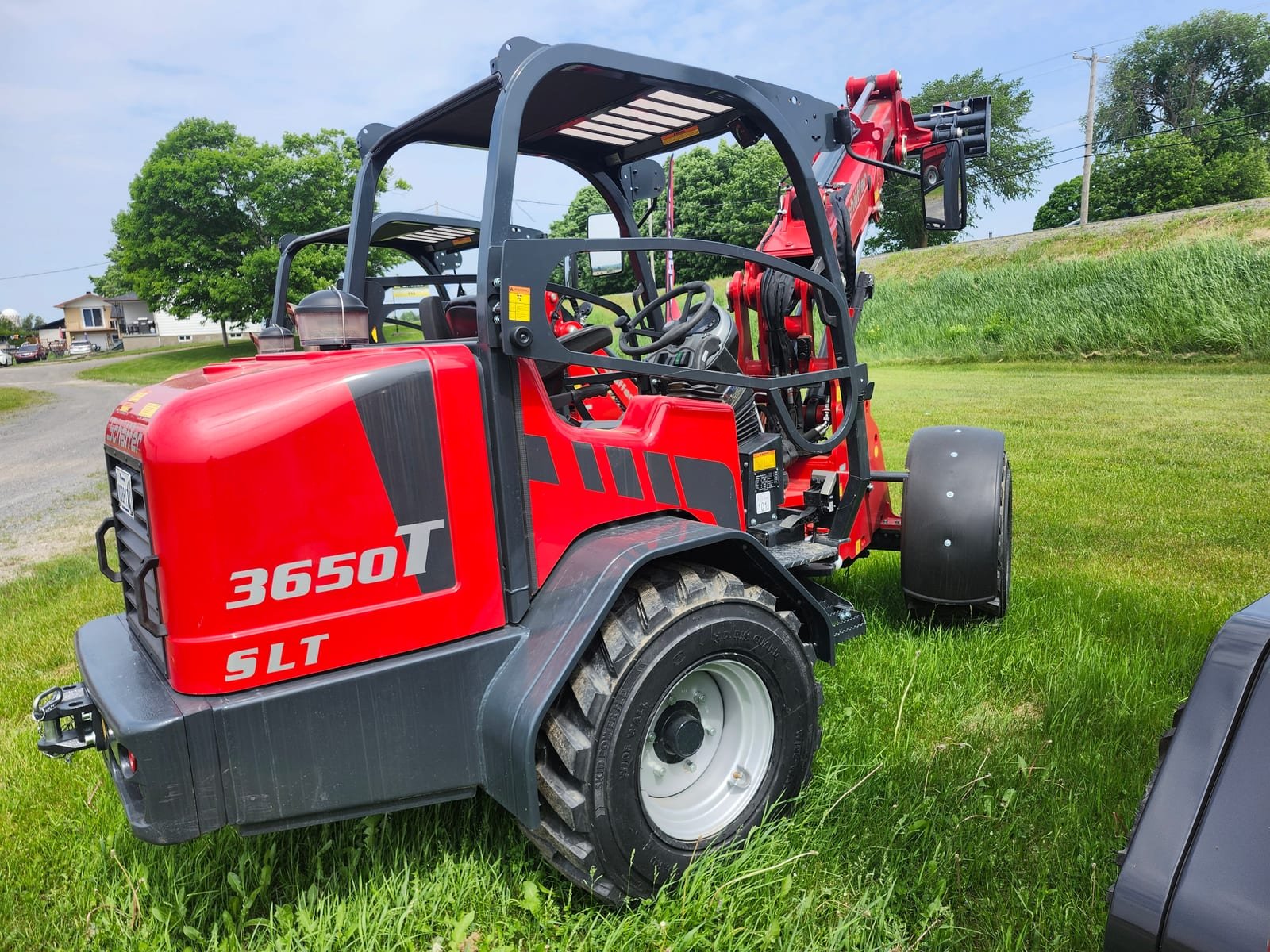
As a rough guide, at the time of this check, Benco’s public catalog listed a used CASE 621E wheel loader at $49,000 and a Schäffer 5680T telescopic loader at $146,450. These prices are sourced from Benco’s website but should be treated as guidelines to be confirmed, as inventory, condition, options, and terms of sale may vary.
| Type of need | Indicative price range | Things to check before comparing |
|---|---|---|
| Used wheel loader | Around $50,000 for certain models listed in inventory | Hours of use, hydraulic system condition, tires, maintenance history |
| Recent articulated or telescopic loader | Example shown: Schäffer 5680T at $146,450, subject to inventory | Capacity, accessories, warranty, service, parts availability |
| Loader for rent with operator | Examples shown: Schaffer 6680Z at $148/hr and Schaffer 9640T at $179/hr | Duration, transportation, season, contract, required accessories |
| Accessories | Examples shown: forks, salt spreader, and brushes between $6,600 and $9,900 | Compatibility, quick coupler, usage, maintenance |
These amounts do not replace a formal quote. They are primarily intended to provide a general idea of costs before comparing purchase, rental, new, used, and necessary accessories.
Environmental compliance can also influence the choice of a model, especially for companies that must meet internal or contractual requirements. Before purchasing, it is therefore useful to confirm not only the price of the machine but also the exact specifications of the model, its applicable compliance level, and associated maintenance requirements.
You must also take into account the costs associated with the machine:
- transportation;
- accessories;
- preventive maintenance;
- spare parts;
- operator training;
- financing or long-term lease terms, if available;
- expected service life;
- service availability.
A lower price may seem advantageous at first, but can become less cost-effective if the machine is ill-suited, difficult to maintain, or frequently out of service. Conversely, a well-chosen machine can better sustain the company’s productivity over several seasons.
Get a personalized price estimate
Can’t decide between several options? Benco can help you compare the possibilities based on your intended use, budget, and on-site constraints.
Request a personalized quote to choose a wheel loader suited to your operations.What is the difference between a wheel loader and a skid-steer loader?
A wheel loader and a skid steer loader can sometimes meet similar needs, but they are not designed for the same priorities. The skid-steer loader is often chosen for tight spaces, small job sites, and tasks where maximum agility is required. The wheel loader, on the other hand, is generally valued for its capacity, stability, comfort, and efficiency in more demanding loading operations.
| Criterion | Wheel loader | Compact loader |
|---|---|---|
| Typical Use | Loading, snow removal, construction sites, yards, municipal | Tight spaces, small jobs, landscaping, light material handling |
| Maneuverability | Good, especially with an articulated model | Very good in tight spaces |
| Capacity | Often better suited for large volumes | More limited depending on the model |
| Snow removal | Very useful for driveways, streets, parking lots, and larger areas | Useful for small sites or tight access points |
| Operating comfort | Often advantageous for long periods | Varies by machine |
| Versatility | High with buckets, forks, brooms, salt spreaders | Also high, but in a more compact format |
The best choice therefore depends on the situation. For a small yard, a skid-steer loader may suffice. For a business that needs to move larger volumes, work longer hours, or handle more extensive snow removal operations, a wheel loader is often a better fit.
Renting vs. Buying: Which option is the most cost-effective for your business?
The decision between renting and buying depends mainly on how often the machine is used. A business that uses a wheel loader every week has different needs than one that only uses it for a single season or a specific project.
Renting may make more sense if the need is temporary, seasonal, or tied to a specific contract. Buying may be more appropriate when the machine is used regularly, integrated into a permanent fleet, or configured for recurring operations.
Beyond the monthly payment or purchase price, you must also consider maintenance, accessories, availability, transportation, storage, annual usage, and after-sales service.
The Benefits of Short-Term Rental for Snow Removal
Short-term rental is often well-suited to seasonal needs, one-off contracts, or periods of high demand. This is the case, for example, for a snow removal company that needs to expand its fleet during the winter or a contractor who needs a loader for a specific job site.
Renting also allows you to test a machine before purchasing it. It reduces the initial investment and provides greater flexibility when needs change rapidly.
For a municipal or commercial snow removal contract, this flexibility can be invaluable. A company may need additional equipment for a few critical weeks without wanting to buy a machine that will remain underutilized the rest of the year.
Purchasing and Financing for Permanent Equipment Fleets
Purchasing becomes more relevant when the machine is used regularly and is part of the company’s normal operations. A municipality, construction company, or equipment fleet manager often wants to retain control over the machine, its attachments, maintenance, and availability.
Purchasing may also be appropriate when you want to configure the equipment to meet specific needs: buckets, forks, tires, snow removal accessories, quick couplers, or other tools.
Long-term rental, leasing, or financing can also be considered when a company wants to preserve its cash flow or avoid an immediate purchase. Each option has its advantages, but terms vary depending on the supplier, the model, and the intended use.
Availability and Support in Richelieu
Benco has a location in Richelieu, which facilitates communication for businesses on Montreal’s South Shore that want to quickly compare options for purchase or rental. Whether for a snow removal contract, a short-term loader need, or a machine to integrate into a permanent fleet, this proximity can reduce the time required for discussions, quotes, and service coordination.
Inventory is subject to change based on model, season, and current demand. The most effective approach is therefore to quickly confirm available units, compatible accessories, and rental or purchase terms before the start of a contract or a period of high demand.
Check availability in Richelieu
Do you need a loader for the snow removal season, a construction site, or a short-term rental? Contact Benco to check the models, accessories, and options available based on the model and season.
Check availability of a wheel loaderNew or used wheel loader: which is the best investment?
The choice between new and used depends on your budget, acceptable risk level, and intended use.
A new wheel loader can offer a more up-to-date configuration, a warranty, modern features, and less uncertainty about the machine’s history. This is a good fit for businesses looking to add long-term equipment to their fleet.
A used wheel loader can be a good option to reduce the purchase cost, especially if the machine is well-maintained and suited to your needs. However, you need to be more vigilant. The maintenance history, operating hours, hydraulic system, tires, joints, transmission, and parts must be thoroughly inspected.
The best investment is therefore not automatically new or used. It is the one that matches actual usage, budget, and the level of support available after purchase.
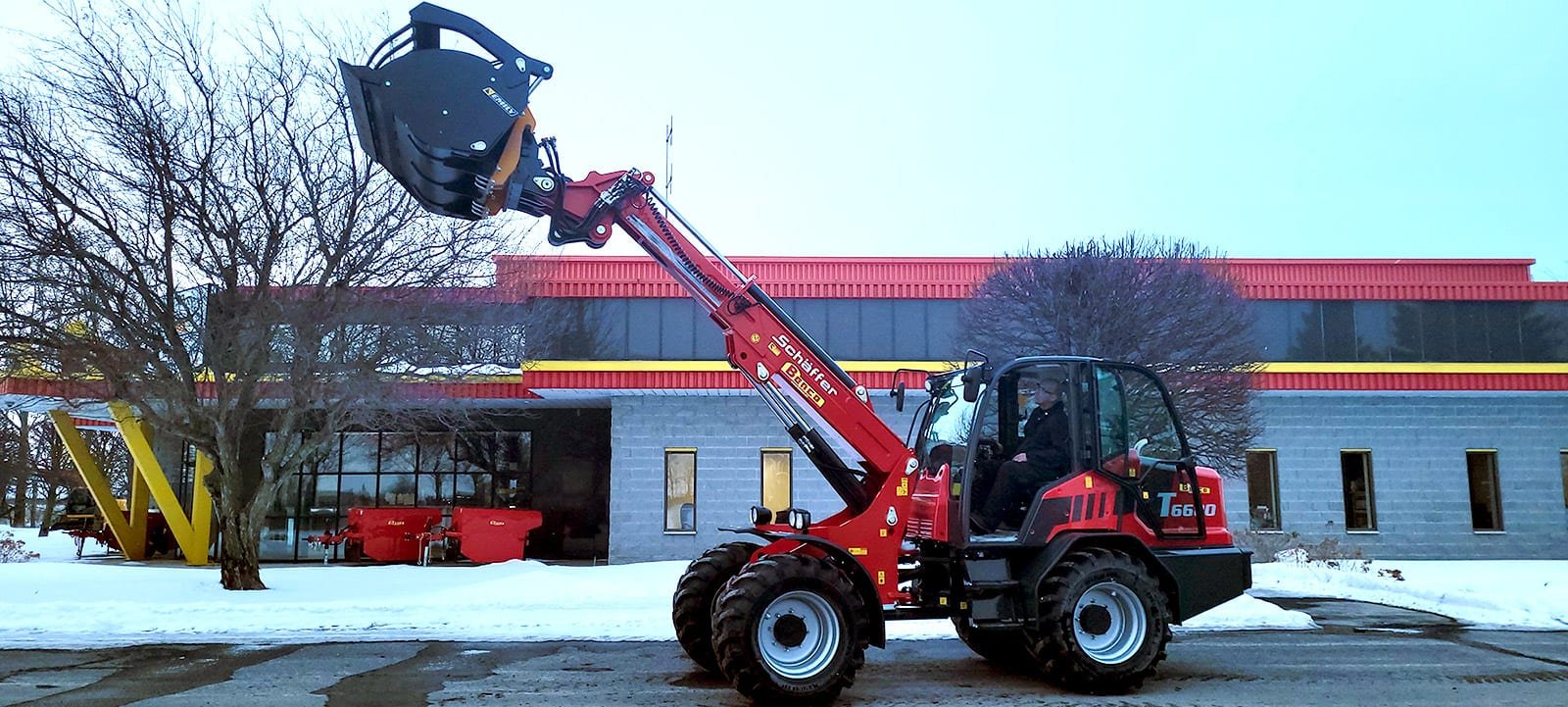
Why choose a Schäffer articulated loader?
The Schäffer models available at Benco are particularly well-suited for businesses looking for a compact, maneuverable, and versatile machine. Their articulated design makes it easier to maneuver in tighter spaces, which is useful for snow removal, commercial yards, certain municipal projects, and operations where precision matters.
For businesses in Quebec, this maneuverability can be a real advantage. Job sites aren’t always large or easy to navigate. Between parking lots, curbs, residential areas, narrow streets, and job site access points, an agile machine can help you work more efficiently.
The value of a Schäffer articulated loader isn’t limited to snow removal. Depending on the configuration and accessories, it can also be used for material handling, loading, yard cleanup, municipal work, and various commercial tasks.
As with any equipment, however, you must choose the model based on its intended use. The brand is important, but the configuration, service, accessories, and support are just as crucial.
Why choose Benco for a wheel loader?
Benco stands out for its local roots, its expertise in machinery, and its ability to help businesses choose a solution tailored to their specific needs.
- Specialist in wheel loaders, forklifts, and sidewalk snow blowers on Montreal’s South Shore;
- A presence in Richelieu to facilitate communication, quotes, follow-up, and access to services;
- A catalog organized around sales, rentals, trade-ins, accessories, and specialized equipment;
- Support for maintenance, repairs, modifications, and customization of machinery to meet on-site needs;
- extensive experience in the municipal, industrial, construction, agricultural, and snow removal sectors;
- consultative approach to help you compare the right model, the right accessory, and the right purchase option before requesting a quote.
Where can you rent a wheel loader on Montreal’s South Shore?
For a business located on Montreal’s South Shore, renting a wheel loader shouldn’t be based solely on a spec sheet. Snow removal contracts, site access, yard widths, operating schedules, and accessory requirements can vary significantly from one client to another.
A local supplier can help ask the right questions before recommending an option. Benco features categories for sales, rentals, accessories, wheel loaders, and Schäffer models, which helps steer the discussion toward options that already align with the customer’s needs. It is essential to understand the type of work, duration, necessary accessories, access constraints, and service availability.
Benco can assist companies looking to purchase or rent a wheel loader, depending on availability and project requirements. The goal is not just to provide a machine, but to help the customer choose a solution that aligns with their site conditions, budget, and schedule.
The Importance of After-Sales Service and Genuine Parts
A wheel loader is a significant investment. However, the machine itself is only part of the decision. After-sales service, replacement parts, and preventive maintenance can make a big difference in the equipment’s lifespan and the continuity of operations.
A machine that is out of service during a critical period can be costly in terms of productivity. This is especially true during the snow removal season, when a breakdown can affect a contract, a road, a parking lot, or a municipal service.
A good maintenance plan should account for fluids, filters, the hydraulic system, tires, joints, brakes, attachments, and seasonal inspections. Before winter, it may be helpful to inspect the machine more thoroughly to minimize risks during intensive operations.
Choosing the right supplier therefore becomes a strategic decision. A company shouldn’t just ask, “What’s the price?” It should also ask, “Who will help me if the machine needs maintenance, parts, or technical advice?”
Conclusion: Optimize your productivity with Benco
The right wheel loader depends on your specific on-site needs. A municipality, a snow removal company, a construction contractor, and a fleet manager do not have the same priorities. Some will need a versatile machine for multiple seasons. Others will look for a short-term rental to fulfill a specific contract. Some will also want to compare a new model, used equipment, or a Schäffer articulated loader.
Before making a choice, take the time to compare the intended use, lifting capacity, operating weight, bucket, attachments, price, maintenance, and after-sales service. It’s this comprehensive approach that helps you avoid unpleasant surprises.
Need a wheel loader for your operations in Quebec? Contact Benco to compare available options and get a recommendation tailored to your needs.
Talk to a Benco specialist
Looking for a wheel loader for your operations in Quebec? Benco can help you compare options based on your application, budget, and site constraints.
Request a quoteFAQ
What is the budget for a wheel loader in Quebec?
The budget for a wheel loader depends on the model, whether it’s new or used, accessories, engine type, options, included service, and purchase terms. For example, Benco’s public catalog lists a used CASE 621E at $49,000 and a Schäffer 5680T telescopic loader at $146,450. These prices must be confirmed via a quote, as inventory, condition, options, and terms of sale may vary.
What is the difference between a wheel loader and a skid-steer loader?
The wheel loader is often chosen for loading operations, snow removal, stability, and larger volumes. The skid steer loader is more popular in tight spaces, on small job sites, and for work that requires a high degree of agility.
Where can I rent a wheel loader on Montreal’s South Shore?
Businesses located on Montreal’s South Shore, in Richelieu, or in the surrounding area can turn to a local supplier like Benco to compare rental options, attachments, service, and availability based on their needs.
What bucket capacity should you choose for a wheel loader?
The right bucket capacity depends on the material to be moved, the volume, the weight, the machine’s lifting capacity, and the intended use. A snow bucket, a gravel bucket, a dirt bucket, or forks do not meet the same needs.
New or used wheel loader: which is the better investment?
A new loader is a good choice for a modern configuration, a warranty, and less uncertainty. A used loader can reduce the initial cost, but requires a thorough inspection of its condition, hours of use, maintenance history, and mechanical components.
Related Articles
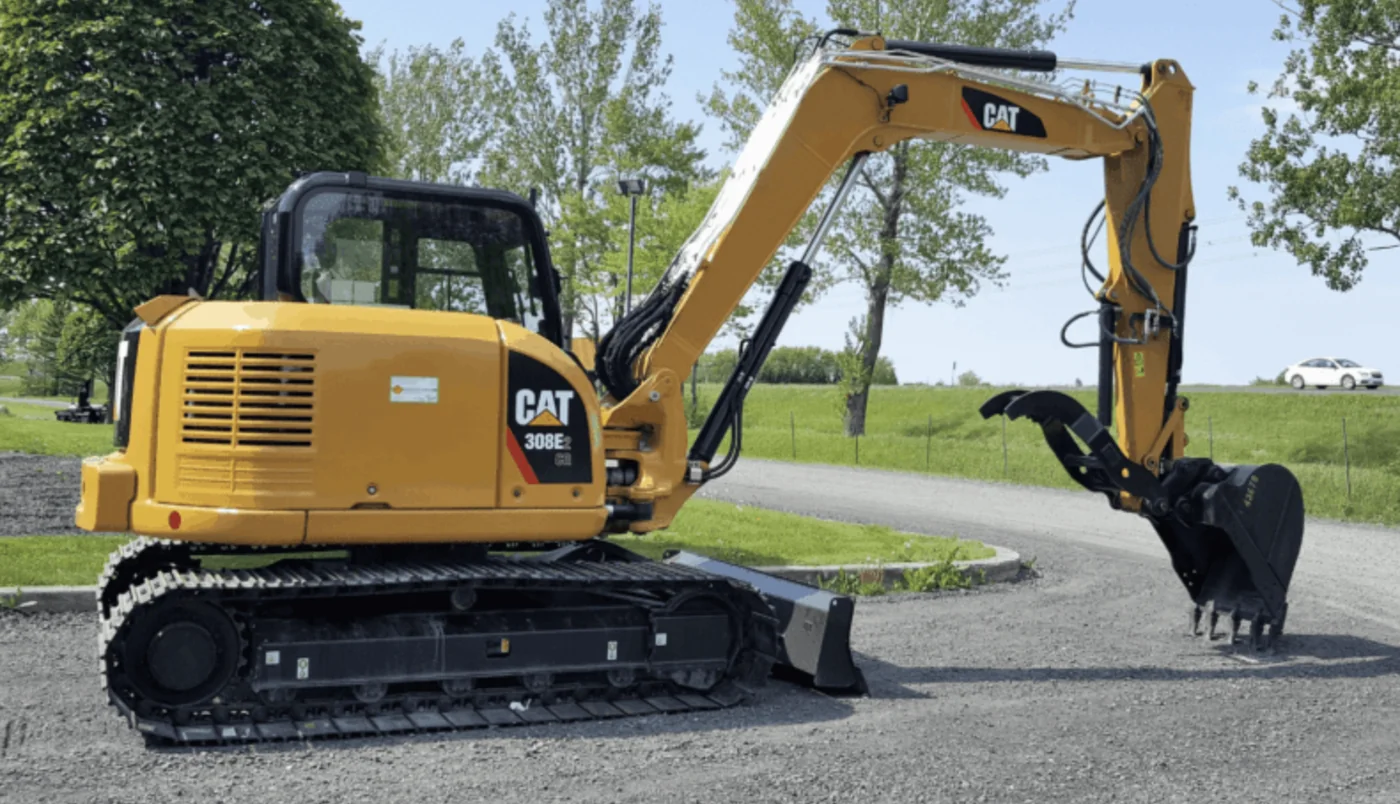
Heavy Equipment Rental in Quebec: The Complete Guide 2026
Everything you need to know about heavy equipment rental in Quebec: prices, equipment options, with or without an operat...
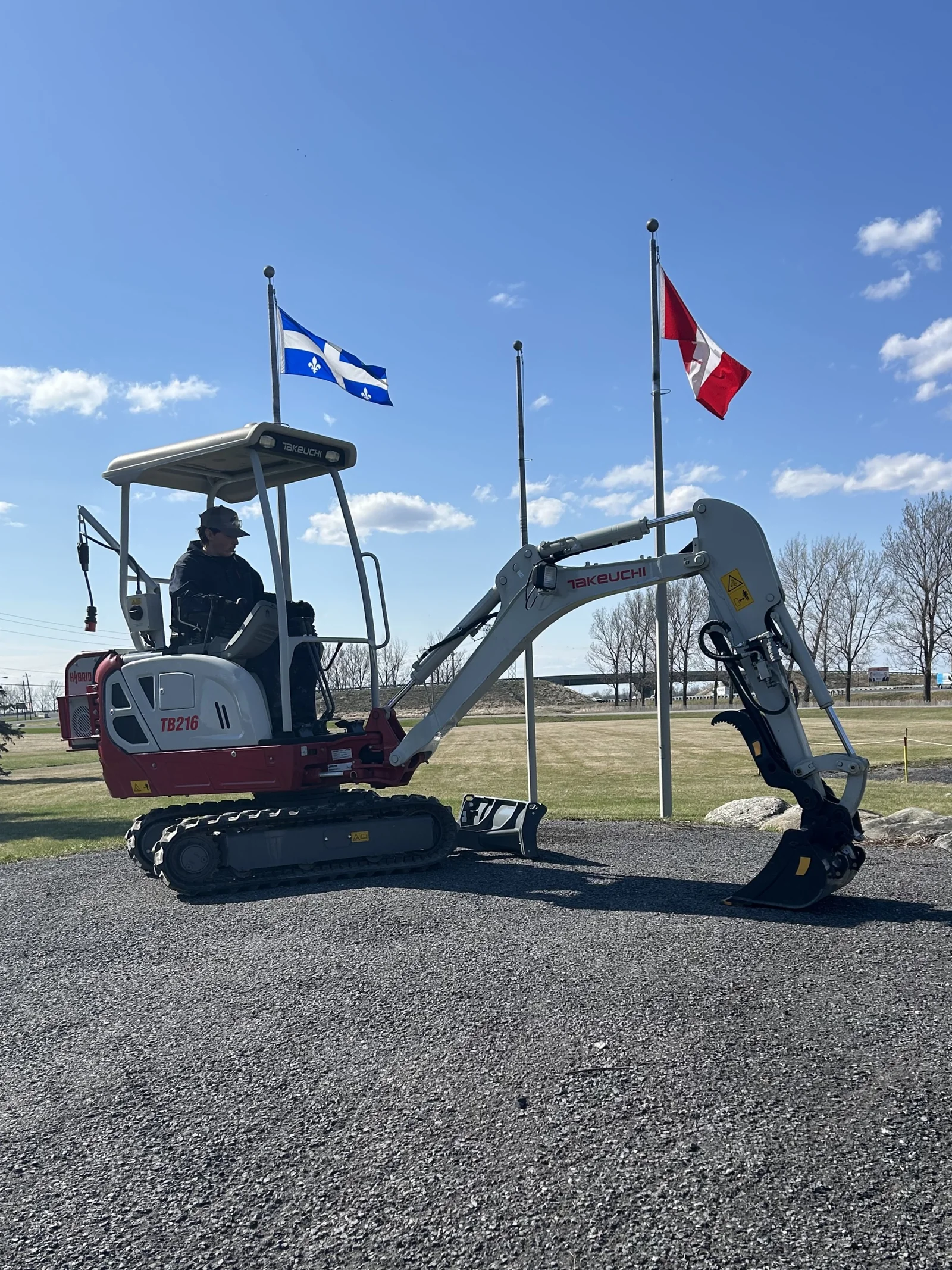
Excavator Rental in Quebec: Guide and Prices for 2026
Looking to rent an excavator in Quebec? Compare our daily and weekly rates (without an operator). Request a personalized...
Merci !
Votre demande est bien envoyée — on vous revient rapidement. Vous avez 30 secondes ? Votre avis aide énormément notre équipe.
Cliquez une étoile → Google s'ouvre pour publier votre avis.